
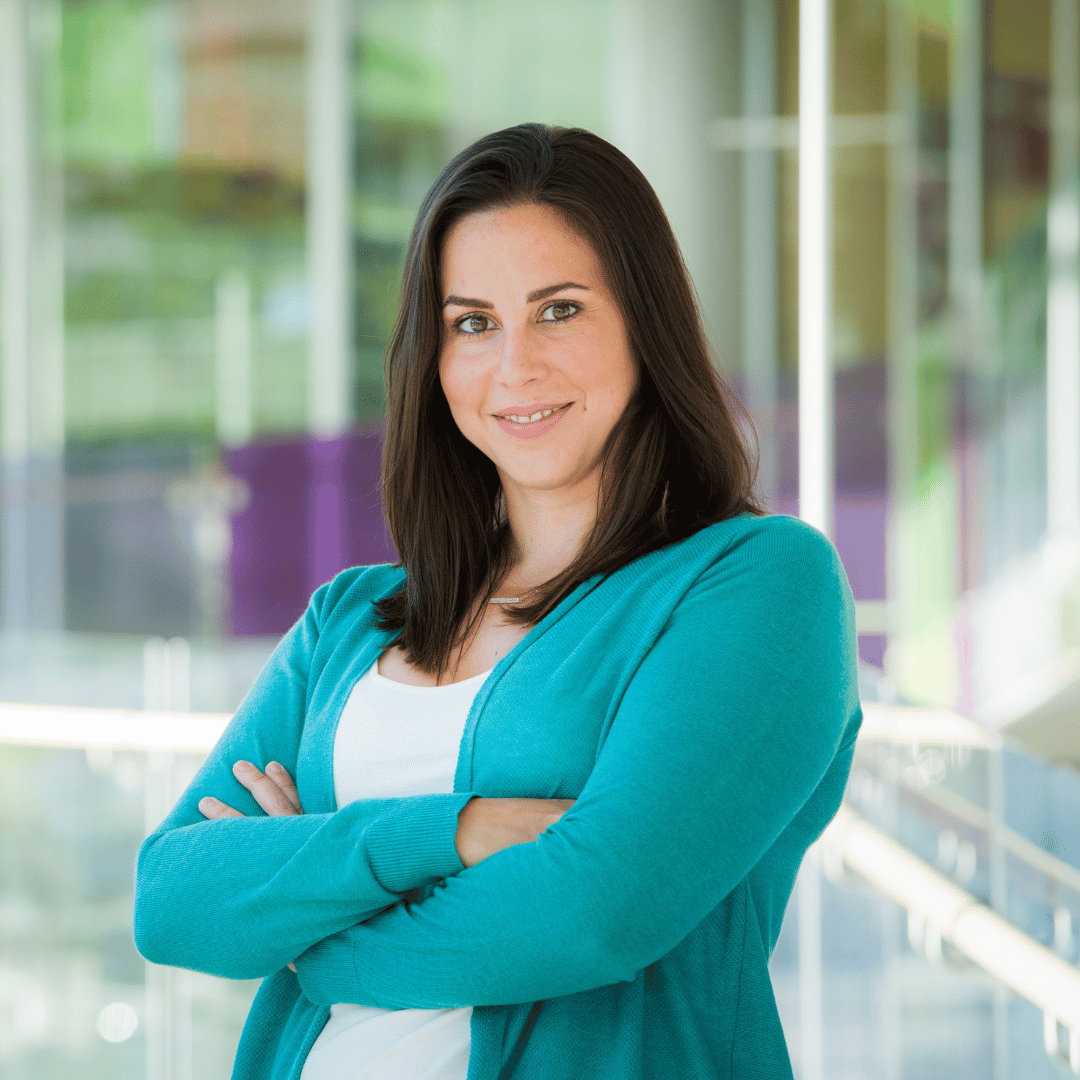
Meet: Michelle Baysan
Title: Conference Manager
Portfolio: Conferences
Describe what you do and what programs you work on:
I coordinate a number of medical education programs that support clinicians across British Columbia (BC) and beyond — attracting health professionals from around the world.
Much of my work focuses on organizing conferences that are not only clinically valuable but also foster connection and community among health professionals. I manage the BC Rural Health Conference, Whistler Anesthesiology Summit, the Refresher Course for Family Practice Anesthesia and the Pacific Psychopharmacology Conference, among others.
I’m also working on an exciting new program focused on practical menopause updates, which is being developed in response to the growing need for quality women’s health education in primary care.
Which partners do you work with most closely?
I work closely with the Rural Coordination Centre of BC (RCCbc) — a key partner in delivering the annual BC Rural Health Conference and supporting rural physicians throughout the province. I also collaborate regularly with academic units within the UBC Faculty of Medicine, particularly the Department of Anesthesiology, Pharmacology and Therapeutics on programs like the Whistler Anesthesiology Summit and the Refresher Course for Family Practice Anesthesia.
These partnerships are central to the success of our programs, allowing us to collaborate with local faculty to identify learning needs and ensure we deliver content that’s relevant, evidence-based and impactful.
Who does your work impact?
Rural family physicians, specialists and allied health professionals, especially those practicing in remote or underserved areas. I’m mindful that many of our participants are juggling a wide scope of responsibilities with limited resources, so we always aim to deliver relevant and timely education.
In what ways does this work impact the health community, health-care system, or wellbeing of the target audience?
Learning activities are designed to improve clinical care, of course — but they also do something equally important: they help health professionals feel connected and supported. In rural areas, where professional isolation can be a real challenge, our events serve as rare opportunities for connection. I think that a sense of community is a big part of what keeps people engaged and thriving in their work.
What do you think are the new opportunities (trends) affecting your work?
There’s a lot of change happening in the continuing professional development (CPD) space, and it’s exciting to be part of. One area I’m especially interested in how we’re starting to leverage artificial intelligence to better understand real learning needs. Instead of relying solely on post-event surveys, we’re exploring how data can help us shape precise learning objectives and build programs that truly reflect what health professionals are facing.
We're also seeing an ongoing trend towards the return to in-person and hybrid learning models. During the pandemic, everything was virtual; and while that increased accessibility, many people (especially in rural areas) missed the interaction that comes with connecting in person. Now, we’re finding a balance to create flexible options that allow people to attend in a way that works for them, without losing the sense of community that’s so essential in CPD.
I’m also interested in bringing more patient voices and stories into our programming. Hearing directly about their challenges, experiences and outcomes brings real-world context to clinical care — a powerful reminder of why this work matters.