
| Image credit: Clayton Gauthier |
In recognition of National Indigenous Peoples Day on June 21, we highlight the importance of learning, reflection and action to address Indigenous-specific racism in health care.
Our new self-paced online course, Alhgoh Together as One, Together as Community: Pathway to Indigenous Cultural Safety supports health professionals to meet new standards and build cultural safety and humility in everyday practice.
Applying the meaning behind Alhgoh
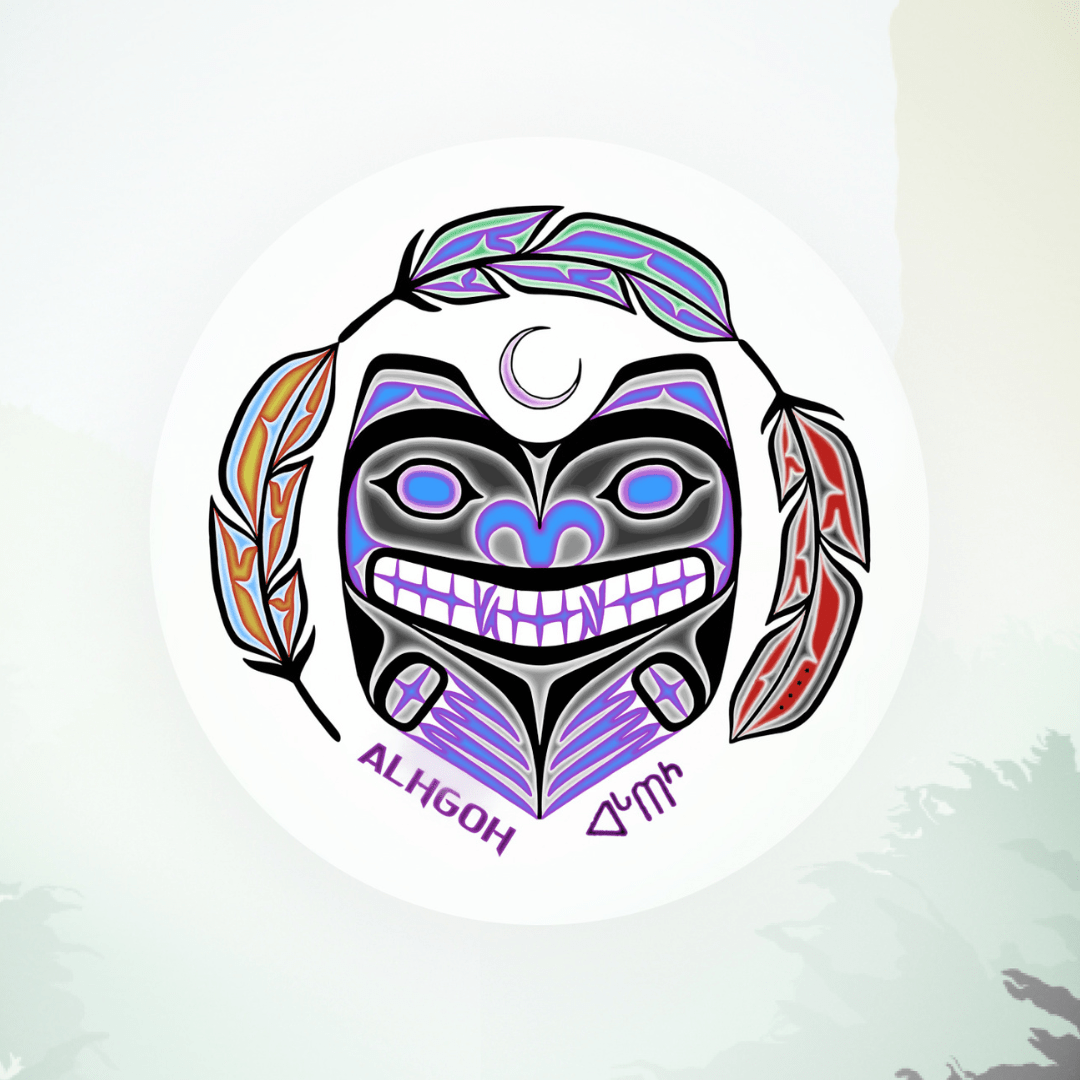
Alhgoh is a word used in Dakelh and neighbouring Wet’suwet’en languages, meaning “together as one, together as a community.” It reflects a shared commitment to unity, relationality and collective responsibility—principles that are foundational to Indigenous approaches to health and wellbeing. Led by Clayton Gauthier, the name and logo were completed honouring the Lheidli T’enneh, as the project began in the Lheidli T’enneh territory.
Grounded in that spirit, the new course invites health professionals to move beyond individual awareness toward community-informed practice that supports culturally safe, respectful and anti-racist care.
“Working through the discomfort that comes with learning about cultural safety, practicing humility with Indigenous patients, identifying Indigenous patients in a respectful way, and knowing what resources are available can be difficult to navigate. These are not small tasks. They require reflection, courage and practice,” shares Dr. Terri Aldred, Indigenous physician, educator and lead course author.
Through clinical scenarios, reflective exercises and practical tools, participants will explore trauma-informed care, respectful communication and strategies to address power imbalances.
| Language confirmation and guidance provided by Elders Violet Bozoki (Lheidli T’enneh), Armond Sam (Nak'azdli Whut'en), and Peter George (Wet’suwet’en). Artist: Clayton Gauthier. |
A practical pathway for change
Designed for health professionals in a wide range of practice settings, this four-hour accredited course offers a flexible, practice-oriented learning experience.
Throughout the course, participants will:
- recognize self-reflective practice as foundational to cultural safety and humility
- acknowledge harms colonialism and Indigenous-specific racism cause to health experiences
- describe how community, land and culture is a determinant of health
- welcome opportunity to build an anti-racist practice with people seeking care
Matthew Dyck, First Nations / Métis, Senior Advisor on the Provincial Cultural Safety and Humility Team, shares how “the guided self-reflection components are especially powerful. They support participants to notice their own biases, blind spots and emotional responses in ways that feel honest, kind and doable in the reality of busy clinical practice.”
“The distinctions made between Equity, Diversity, and Inclusion (EDI) frameworks and Indigenous-specific anti-racism and cultural safety are also very strong and much-needed" says Dyck, “they’ll help organizations avoid the common pitfall of absorbing Indigenous-specific work into generic diversity initiatives.”
Moving forward — together
Advancing Indigenous cultural safety is an ongoing journey. Guided by the principle of Alhgoh, meaningful change happens when we learn and act together.
This June, we invite you to reflect, learn and act to build safer, more respectful care experiences for Indigenous patients and communities.
“In my work, I've seen how powerful these approaches can be for Indigenous patients and communities. Throughout this course, you'll explore practical strategies, real scenarios and reflective exercises to support your day-to-day work,” says Tarah Reece, Indigenous nurse practitioner and lead course author.