
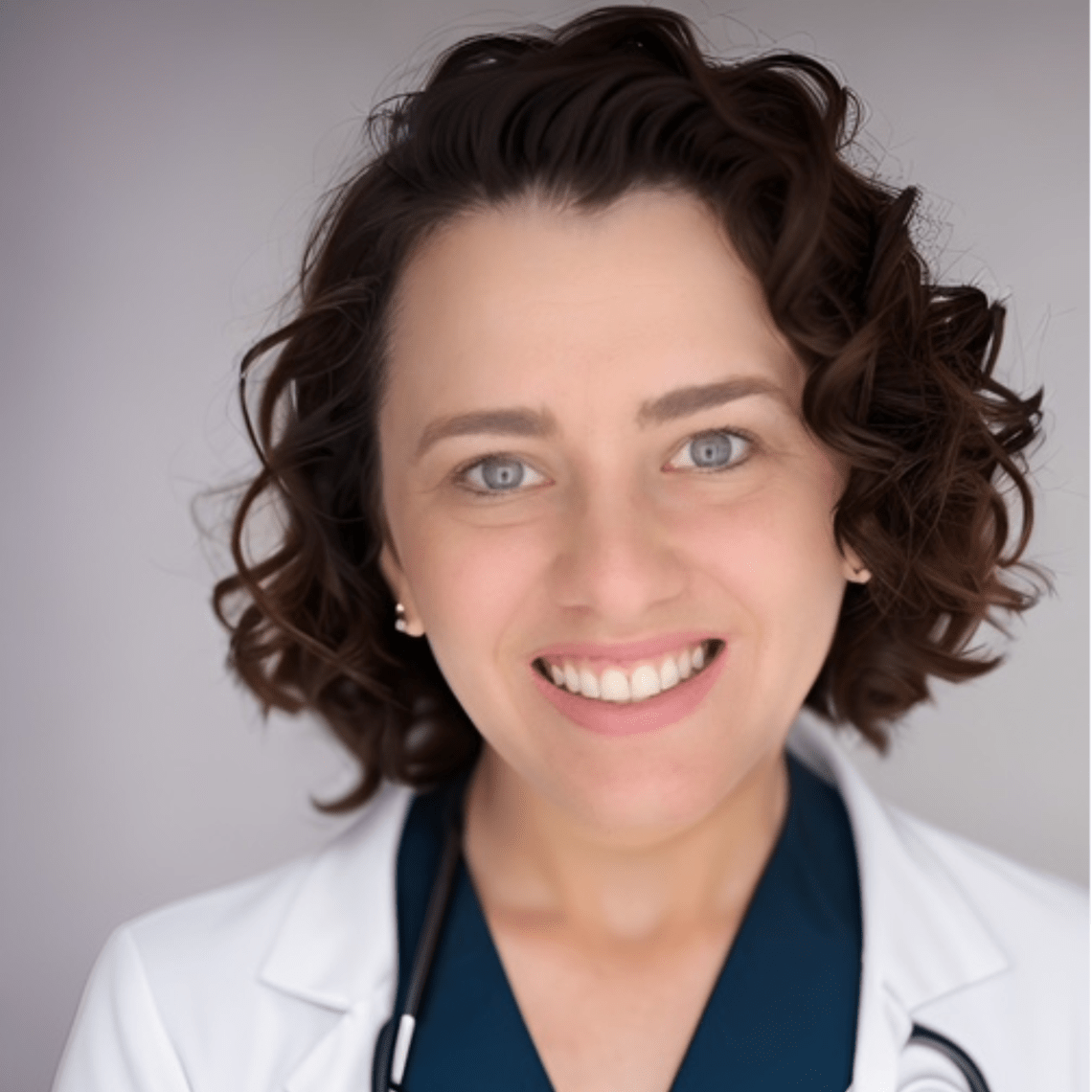
Meet: Dr. Sofia Valanci
Title: Clinical Director, Strategic Initiatives
Portfolio: Clinical Directors and Advisors
Dr. Sofia Valanci, MD, PhD, CPC (HC), joins UBC CPD in the new role of Clinical Director, Strategic Initiatives.
In this role, Sofia will act as a senior advisor to leadership, particularly in the advancement of emerging technologies in CPD, and will champion innovations in education and research.
We asked Sofia about herself, the new role, and her focus in the months ahead.
Describe what you do and what programs you work on:
I'm a general surgeon, internationally trained. I spent five years at the Royal College of Physicians and Surgeons of Canada in Ottawa as a physician advisor before moving to Vancouver. In the last six months, I have built relationships with the UBC CPD Coaching and Mentoring Program (CAMP) and research team. I also participated in the first episode of the CPD In Practice Podcast to break down Generative Artificial Intelligence (AI) in Medicine.
As the new Clinical Director, Strategic Initiatives, my role is broad. I act as a strategic advisor, help identify where the health-care landscape is shifting and represent UBC CPD to external partners. Things like accreditation standards and quality improvement will also be part of my day-to-day.
To start, my current focus is AI. Everyone wants to learn not just how to use it, but how to use it well.
It is important to me to represent practicing physicians well and make sure CPD programming stays relatable and practical for immediate use.
Which partners do you work with most closely?
The Royal College, the College of Family Physicians of Canada (CFPC), and the College of Physicians and Surgeons of BC (CPSBC) are where I have great relationships already. I'm also part of the Practice Improvement Hub, and involved with AI in Practice, a new joint initiative between Rural CPD and the Rural Coordination Center of BC that's currently in the needs assessment stage, aimed at bringing AI tools to rural physicians.
Who does your work impact?
Practicing physicians broadly, across specialties and geography. Part of my role is making sure CPD design reflects what physicians need, not just what's easy to deliver.
In what ways does this work impact the health community, health-care system, or well-being of the target audience?
My passion has always been about closing the gap between what CPD measures and what actually helps physicians practice better. I want CPD to reflect how physicians practice, not just check a box.
Real learning happens informally, in the hallway conversation after a hard case, in the thing you looked up at 11 p.m. because a patient's presentation didn't fit the textbook. That counts. It should count.
Lifelong learning isn't something physicians do because a college mandates it. It's what keeps us good at the job.
What do you think are the new opportunities (trends) affecting your work?
AI is one piece. There's a literacy gap. Most of us are already using these tools informally, usually because a colleague showed us something, not because anyone formally trained us.
While CPD providers scramble to keep up with the rapidly changing technology, we are asking physicians to adapt. A lot of my work will support UBC CPD to become a leader in this space and support the gap between physician needs and CPD delivery, whether you’re new to practice in BC, practicing in a rural or remote community, academic environments, or a major urban centre.