
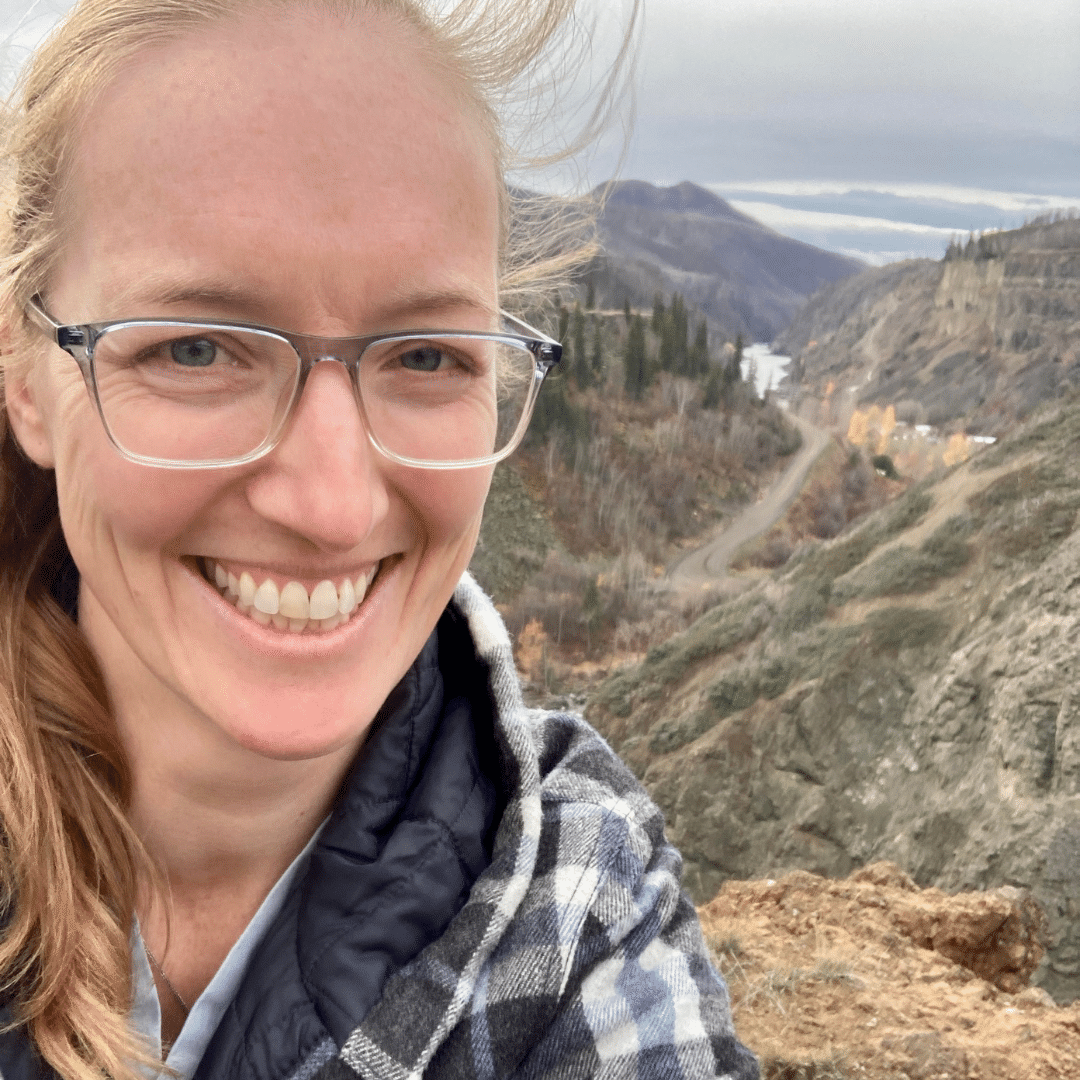
Meet: Dr. Breanne Abbott
Title: Family Physician (MD, CCFP, FCFP)
Portfolio: Rural
Describe what you do and what programs you work on:
I am a rural family physician working in Dease Lake, British Columbia—one of the most remote communities in the province. I provide full-scope family medicine and 24/7 emergency care to a primarily Tahltan First Nations community with very limited access to diagnostic imaging. I also provide obstetrical coverage in Surrey, one of the busiest maternity centres in the country, where point-of-care obstetrical ultrasound frequently changes management and improves patient care.
Through fellowship training with the Remote Ultrasound Fellowship and participation in a Hands-On Ultrasound Education (HOUSE) course in Dease Lake, I developed a strong interest in Rural Point-of-Care Ultrasound (POCUS) education and have since become an instructor with the HOUSE program.
Who does your work impact?
My work has highlighted for me how transformative point-of-care ultrasound (POCUS) can be in rural medicine—not only as a clinical tool, but also to improve equity and access to care. The nearest diagnostic ultrasound is a seven-to-ten-hour drive from my community, creating a significant barrier for patients, particularly during winter when road conditions can be challenging.
I’m passionate about bringing ultrasound education to rural physicians because the barriers to traditional ultrasound training are particularly significant for those working in remote communities. By providing accessible, practical, hands-on education, programs such as HOUSE help build sustainable ultrasound capacity and improve access to timely, high-quality care.
In what ways does this work impact the health community, health-care system, or well-being of the target audience?
POCUS can have a significant impact on patient care in rural communities by reducing diagnostic delays and allowing expedited treatment. The ability to identify conditions such as cholecystitis, ruptured ectopic pregnancy, deep venous thrombosis and pulmonary embolism at the bedside can be particularly valuable when diagnostic imaging is unavailable.
Most recently, I used POCUS to identify a pulmonary embolism in a patient presenting with mild shortness of breath—something that would not have been possible prior to my training.
Similarly, diagnosing DVT at the bedside can allow patients to begin treatment without leaving their community. In remote regions, avoiding an unnecessary trip for diagnostic imaging can mean avoiding days away from home, lost income, travel expenses, and significant personal and financial burden.
As a HOUSE instructor, I can extend this impact beyond my own practice by sharing practical skills across BC. By helping physicians develop confidence and competence in POCUS, HOUSE supports greater diagnostic capacity within rural communities and reduces reliance on distant imaging services.
For me, POCUS has brought a renewed sense of excitement to practicing medicine in a rural environment. It can reduce diagnostic uncertainty, support timely clinical decision-making, and help rural physicians provide care closer to home.
What do you think are the new opportunities (trends) affecting your work?
A major new opportunity affecting my work is the increasing accessibility of handheld ultrasound. These portable devices can easily be brought to home visits, outreach clinics and remote nursing stations, allowing rural clinicians to obtain important diagnostic information at the bedside.
Real-time virtual support (RTVS) also allows clinicians to receive guidance during a scan or assistance interpreting images. At the same time, AI-enabled ultrasound software is evolving, with tools for applications such as cardiac output, bladder volume and anatomy identification.
These advances will influence my work both as a rural physician and HOUSE instructor. I can incorporate these technologies into my own practice and help rural colleagues develop the skills and confidence to use them safely.
Interested in the upcoming HOUSE sessions? Join us in Vancouver:
| Nov. 21 (Sat) | 8 a.m.–5 p.m. PCT | Hands-On Ultrasound Education (HOUSE) AMB |
| Nov. 22 (Sun) | 8 a.m.–5 p.m. PCT | Hands-On Ultrasound Education (HOUSE) OB |