
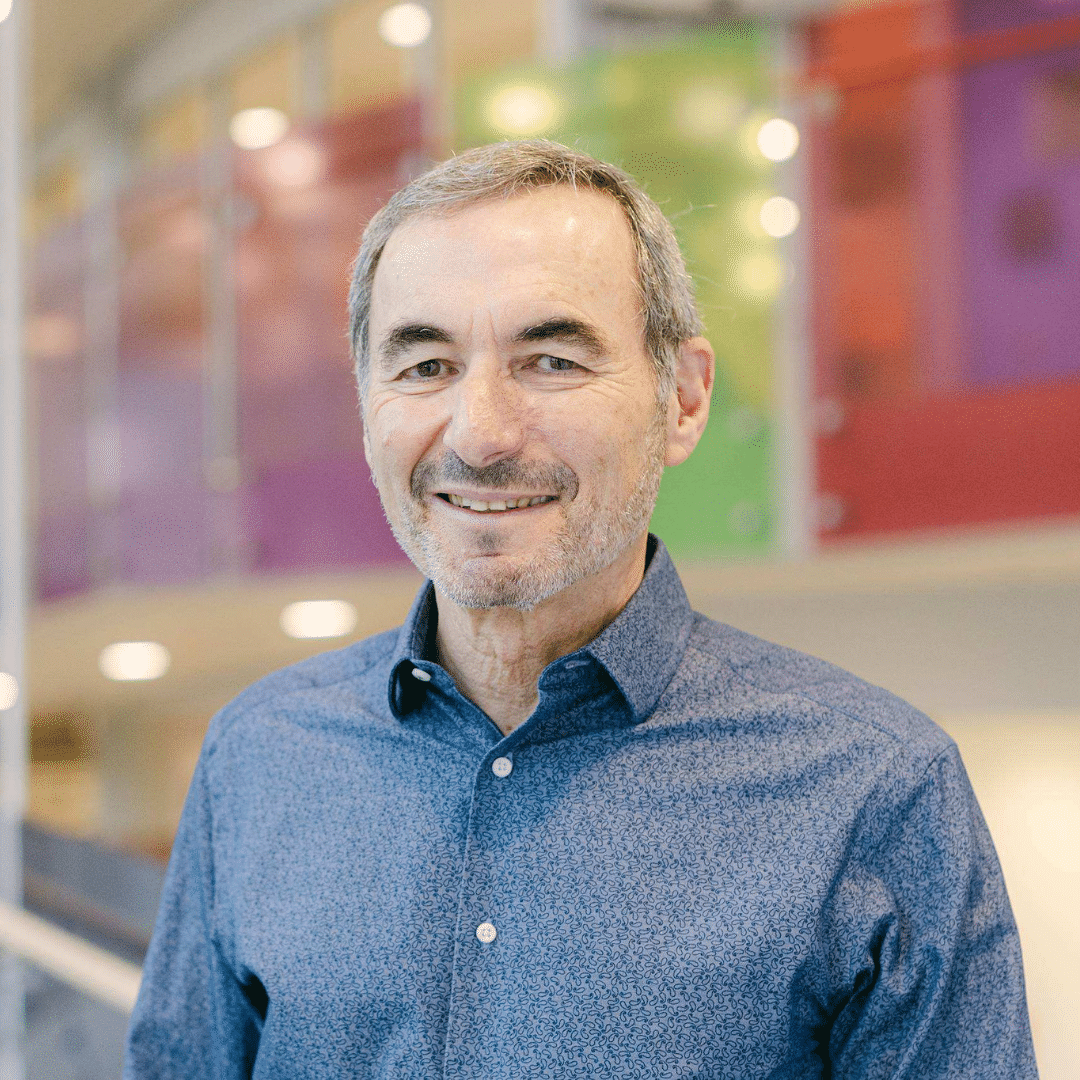
After 44 years of dedicated service, Dr. Bob Bluman is leaving UBC Continuing Professional Development (UBC CPD), departing his current role as Strategic Advisor, leaving behind a remarkable legacy of leadership, innovation and commitment to lifelong learning.
Throughout his many roles with the organization, Bob has witnessed and influenced firsthand the transformation of continuing professional development, from a focus on in-person conferences to dynamic, technology-enabled learning experiences. He’s seen UBC CPD grow from a handful of dedicated individuals to a team of more than fifty, with nearly 300 learning activities each year.
We asked Bob to reflect on some of the defining moments of his career, the evolution of medical CPD, the partnerships and programs that have shaped UBC CPD's success, and his hopes for the future of health-care education.
Looking back over 44 years with UBC CPD, what changes in CME/CPD have had the greatest impact on physicians and health-care teams?
There have been many changes in CME/CPD over the past 44 years but I think the four with the most significant impact would relate to the integration of new technologies, the greater understanding of CPD being not just about supporting the medical expert role, but also about incorporating CanMEDS roles, including a health advocate, leader, professional, collaborator, scholar and communicator, the expansion of CPD to cover all CanMEDS roles, the incorporation of opportunities for interprofessional team-based learning, and the use of CPD as a key lever to support practice improvement.
You've held several roles throughout your career with UBC CPD. What are some of the programs, initiatives, or accomplishments that you're most proud to have been part of?
There are so many that I am grateful for! Among them, I’m especially proud of our initiation and growth of the Rural CPD Program to support learners with the highest need, the BC Physician Integration Program to support the successful integration of international medical graduates (IMGs), our highly successful CME on the Run! Conference which helps keep family physicians and residents, nurse practitioners and students up to date on the breadth of new developments in health-care delivery, as well as our ThisChangedMyPractice blog that encourages readers to consider the adoption of new health-care practices. I’m also proud that we were able to influence better cancer screening practices through the development of online modules and rollout of educational workshops across BC. As well, at the time of COVID-19, we were able to rapidly provide education, including over 50 webinars to support front-line health professionals deliver the best care possible as our understanding of this disease evolved. Our many successes at UBC CPD have been accomplished due to our extremely capable and hardworking team, whom I’m so proud and appreciative to have worked with over so many years.
UBC CPD has built strong partnerships with health organizations, academic institutions, and physician groups across British Columbia and beyond. Which collaborations stand out to you as particularly meaningful or transformative?
UBC CPD has been fortunate to build many strong partnerships over the years that have contributed to its success. In particular, our collaboration with the Rural Coordination Centre of BC (RCCbc) has been transformative in being able to meet the varied CPD needs of rural practice. A partnership with the Joint Clinical Committees (JCCs) has supported delivery of the BC Physician Integration Program as well as many Shared Care initiatives related to Child and Youth Mental Health, Perinatal Care, support for better Indigenous Specific Anti-racism care and the use of Cognitive Behavioral Therapy (CBT) in patient care. Working with the BC Cancer Agency has supported the delivery of better primary care related to cancer and our partnership with the BC Centre for Disease Control has led to meaningful education on COVID-19 and other significant public health issues.
From an academic perspective, collaborations within the UBC Faculty of Medicine have supported the delivery of a broad range of highly valued conferences and other educational offerings: meeting the needs of family physicians, specialists and more health professionals. These relationships have also led to our recently established research portfolio, advancing our research capacity and knowledge sharing.
On a provincial level, UBC CPD’s initiation and ongoing commitment to the BC Practice Improvement Hub, a community of provincial organizations working to advance QI and practice improvement, has enabled collaboration between multiple key stakeholders to meet practice improvement needs as well as to avoid silos and redundancy across BC.
Over the years, you've worked closely with generations of health professionals and educators. What have you learned about what motivates people to continue learning throughout their careers?
By and large, health professionals are self-regulated in deciding how and what they need to learn to stay up to date and incorporate safe and best practices in the delivery of care. They are hard working with limited time to do this, yet want to deliver the best possible care to their patients. They also have varied preferences for how to incorporate ongoing learning into their busy lives. Knowing this, we must motivate health professionals by providing meaningful CPD efficiently and in a multitude of easy to access formats to help them meet their varied needs.
CPD that connects health professionals to their colleagues, provides trusted data or feedback on their performance and incorporates supports, such as coaching, for their efforts at practice improvement can be very motivational and encourage them to deliver high-quality care.
As you look toward the future, what opportunities and challenges do you see for continuing professional development?
With the continued rapid advances in medical knowledge, increased time demands and workloads, along with the evolving and increasing influence of artificial intelligence on so much of what we do, it will be an ongoing challenge for health professionals to keep up to date. CPD can be instrumental in helping health professionals navigate these developments by providing meaningful supports that foster efficient and useful incorporation of these advances.
Trusted AI algorithms with the incorporation of Large Language Models (LLMs) may be increasingly able to analyze any individual learning needs and provide a tailored program to meet them. CPD will enable better access to real-time trusted patient data along with the supports and tools for incorporating practice or quality improvement as well as access to the most useful point of care tools.
There will be a need to support more interprofessional team-based learning and incorporate the patient voice as helpful. There will also be an opportunity for CPD to incorporate the use of any new technologies that support learning or be useful in providing better patient care. As well, CPD should support the challenge of health professionals in dealing with the increasing exposure of their patients to misinformation and disinformation.