
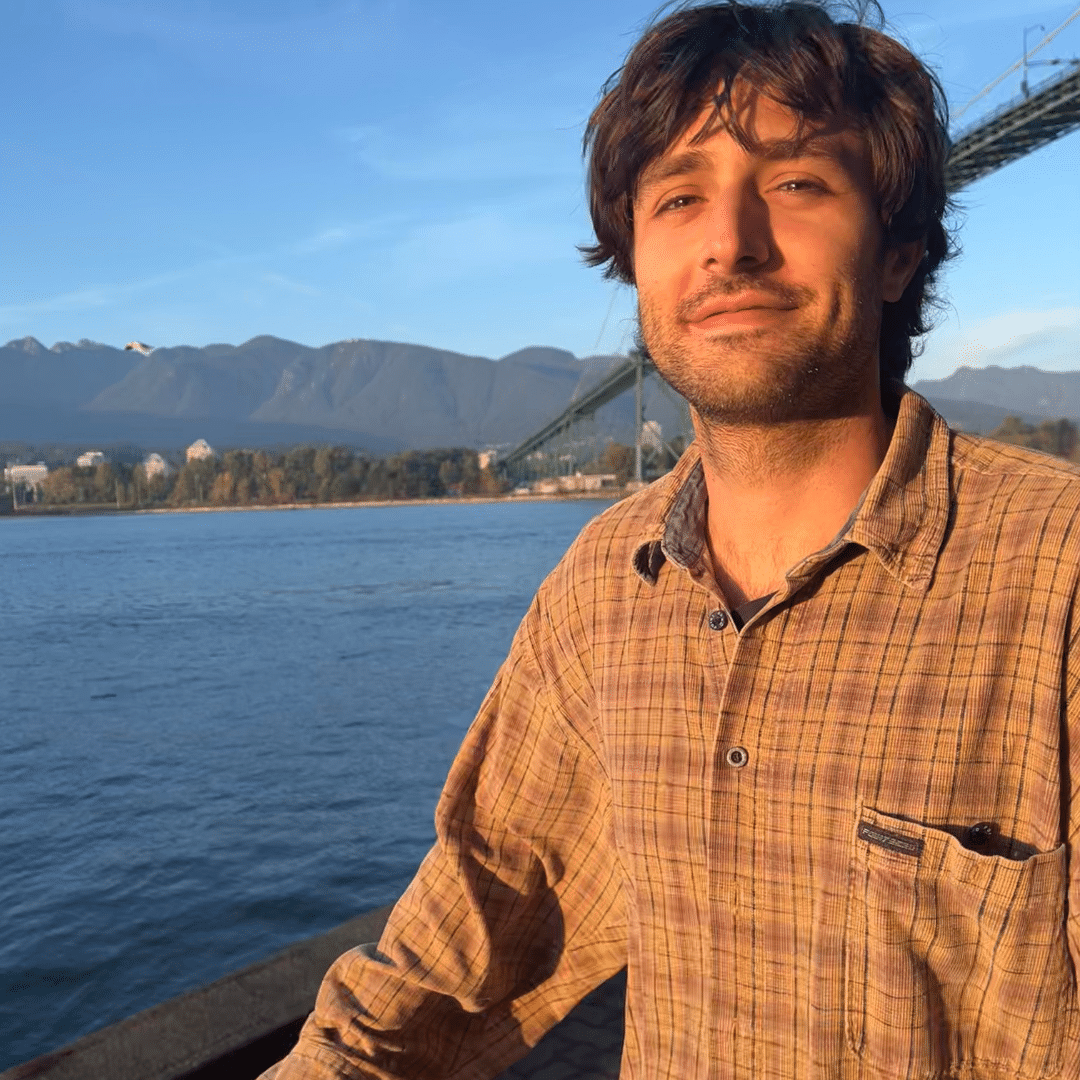
Meet: Matteo Damascelli
Title: Research and Program Assistant
Portfolio: Rural CPD
Describe what you do and what programs you work on:
As a Research and Program Assistant with UBC Rural CPD, one of the main programs I support is the Training Rural Intensive Care Skills (TRICS) program.
The TRICS program is a 12-week pilot program focused on building intensive care skills for rural physicians. The program combines multiple learning formats including clinical, hands-on learning, self-directed learning and a lecture series. My work with TRICS has involved providing logistical support to both the planning and delivery phases of the pilot. Recently, I helped schedule and advertise the Training Rural Intensive Care Skills (TRICS) Lecture Series, which offers lectures on key topics in intensive care.
The Indigenous Patient Led (IPL) program has developed the Nawh Whu’nus’en — We See in Two Worlds curriculum, delivered by a team of Indigenous and non-Indigenous facilitators, to build skills for trauma-sensitive, culturally safe care in rural BC. In my role, I carry out the administrative work that goes into planning and running workshops, along with research and evaluation.
Which partners do you work with most closely?
The TRICS program is distributed across multiple sites in Northern Health. I work closely with physician partners at Ksyen Regional Hospital and University Hospital of Northern BC. Other key partners include the Rural Coordination Centre of BC (RCCbc), the Rural Education Action Plan and the UBC Division of Critical Care.
The Nawh Whu’nus’en — We See in Two Worlds workshops are funded by the Joint Standing Committee on Rural Issues, and we work closely with RCCbc to bring awareness of upcoming workshops.
Who does your work impact?
The TRICS program aims to support rural internal medicine specialists, family physicians and physicians providing critical care in rural BC communities. TRICS can also be helpful to physicians who are near the end of their residency or fellowship and are planning to practice in a rural community.
The IPL program supports health professionals serving rural BC, including family and specialist physicians, nurses, midwives and allied health practitioners.
In what ways does this work impact the health community, health-care system, or well-being of the target audience?
Rural critical care physicians face the unique challenge of providing timely, lifesaving care in communities that are often resource constrained and professionally isolated. Our hope is that, through rural-focused, hands-on training delivered across multiple sites, TRICS can help expand critical care capacity, improve physician confidence and wellbeing, foster professional networks and integration, and improve the health of patients in rural and remote communities.
The IPL program has reached hundreds of health professionals across BC, supporting trauma-sensitive, culturally safe care for Indigenous patients. The workshops also provide a path to healing for health professionals by offering practical skills and a reflective environment for personal wellbeing.
What do you think are the new opportunities (trends) affecting your work?
I have seen a strong interest from rural communities across BC in cultural safety, trauma-sensitive care and land-based healing. The IPL program continues to hear from communities, organizations and professionals who seek opportunities for deeper and more experiential learning, which brings me hope for the future!
I have also seen a steady interest in intensive care-related topics highlighted in the TRICS lecture series.
I hope to continue to explore ways of supporting the growth of learning opportunities in both Indigenous patient care and rural intensive care.